
Summary
Learn the best foods to avoid at night, including caffeine, sugary snacks, spicy foods, and alcohol, to improve sleep quality and digestion.
Late-night snacking is something most people do from time to time. Whether it's a bowl of ice cream while watching TV or a quick snack before bed, nighttime eating can be tempting. However, some foods can interfere with sleep quality, cause digestive discomfort, or leave you feeling sluggish the next morning.
The good news is that not all nighttime snacks are bad. The key is knowing which foods are more likely to disrupt your sleep and avoiding them in the hours before bedtime.
Key Takeaways
Avoid caffeine-containing foods and drinks in the evening.
Spicy foods can trigger heartburn and disrupt sleep.
Heavy, high-fat meals take longer to digest and may cause discomfort.
Sugary snacks can lead to blood sugar spikes and crashes during the night.
Alcohol may make you sleepy initially but can negatively impact sleep quality.
Best Foods to Avoid at Night
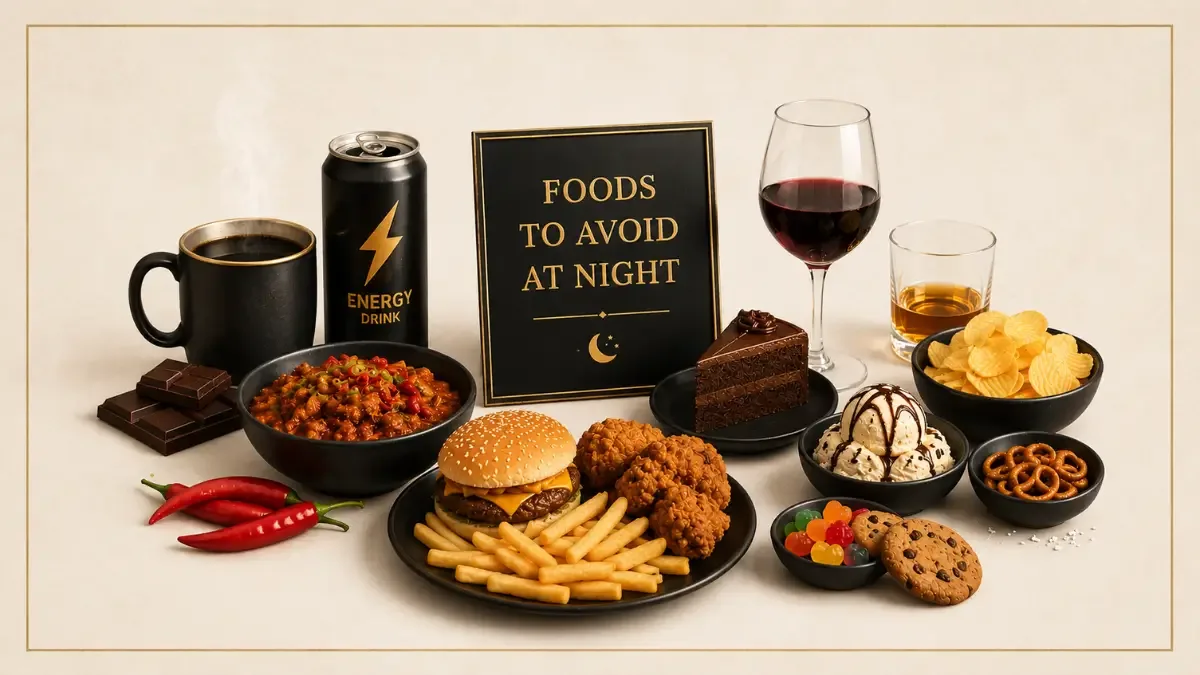
1. Caffeinated Drinks and Foods
Many people know to avoid coffee before bed, but caffeine can also be found in tea, energy drinks, soda, chocolate, and some desserts.
Why it's best to avoid:
Can make it harder to fall asleep
May reduce overall sleep quality
Can increase nighttime awakenings
Who should be especially careful:
People who are sensitive to caffeine or struggle with insomnia.
The downside:
Even consuming caffeine six to eight hours before bedtime can affect sleep in some individuals.
2. Spicy Foods
A spicy curry or hot wings may taste great, but they aren't ideal bedtime snacks.
Why it's best to avoid:
Can trigger acid reflux and heartburn
May increase body temperature
Can cause digestive discomfort when lying down
Who should be especially careful:
Anyone prone to acid reflux, indigestion, or sensitive digestion.
The downside:
Symptoms often become worse when you lie down shortly after eating.
3. Fried and Fatty Foods
French fries, burgers, fried chicken, and other high-fat foods take longer for the body to digest.
Why it's best to avoid:
Slows digestion
Can cause bloating and discomfort
May contribute to acid reflux
Who should be especially careful:
People with digestive issues or those who frequently experience nighttime indigestion.
The downside:
You may wake up feeling heavy or sluggish the next morning.
4. Sugary Desserts and Candy
Cookies, cakes, ice cream, and candy bars are common late-night treats, but they can work against a good night's sleep.
Why it's best to avoid:
Causes rapid blood sugar spikes
May increase nighttime energy levels
Can lead to blood sugar crashes during sleep
Who should be especially careful:
People trying to manage weight, blood sugar levels, or sleep quality.
The downside:
Cravings often lead to overeating because sugary foods are less filling than protein-rich snacks.
5. Large Portions of Red Meat
Red meat is rich in protein and nutrients, but it's also one of the slower foods to digest.
Why it's best to avoid:
Requires significant digestive effort
May leave you feeling overly full
Can interfere with comfortable sleep
Who should be especially careful:
Anyone eating dinner late in the evening.
The downside:
A large steak close to bedtime may leave your digestive system working overtime while you're trying to sleep.
6. Alcohol
Many people believe alcohol helps them sleep because it creates feelings of relaxation and drowsiness.
Why it's best to avoid:
Disrupts normal sleep cycles
Reduces REM sleep
Can increase nighttime awakenings
Who should be especially careful:
People who already struggle with sleep quality or snoring.
The downside:
Although you may fall asleep faster, the overall quality of sleep is often worse.
7. Salty Snacks
Potato chips, pretzels, and other salty snacks are popular evening treats.
Why it's best to avoid:
Can increase thirst during the night
May contribute to water retention
Often encourage overeating
Who should be especially careful:
Individuals monitoring sodium intake or blood pressure.
The downside:
You may wake up feeling thirsty or bloated.
Why Late-Night Food Choices Matter
What you eat before bed affects more than just digestion. Certain foods can influence:
Sleep quality
Energy levels the next day
Weight management goals
Blood sugar regulation
Acid reflux symptoms
While everyone's body responds differently, choosing lighter, easier-to-digest foods in the evening generally supports better sleep and overall health.
Better Alternatives for Late-Night Snacking
If you're genuinely hungry before bed, consider lighter options such as:
Greek yogurt
A banana
Cottage cheese
A handful of almonds
Oatmeal
Whole-grain crackers with peanut butter
These foods provide nutrients without placing excessive strain on digestion.
What to Look for in a Healthy Evening Snack
When choosing a bedtime snack, prioritize:
Moderate portion sizes
Low added sugar
Lean protein
Healthy fats
Easily digestible ingredients
Avoid snacks that leave you feeling overly full or uncomfortable.
The Bottom Line
The best foods to avoid at night are those that can disrupt sleep, trigger digestive issues, or cause blood sugar fluctuations. Caffeinated products, spicy foods, fried meals, sugary desserts, alcohol, and salty snacks are among the biggest offenders.
Instead, opt for lighter, balanced snacks if hunger strikes before bed. Making smarter nighttime food choices can help improve sleep quality, support digestion, and leave you feeling more refreshed the next morning.
Comments
No comments yet — be the first.